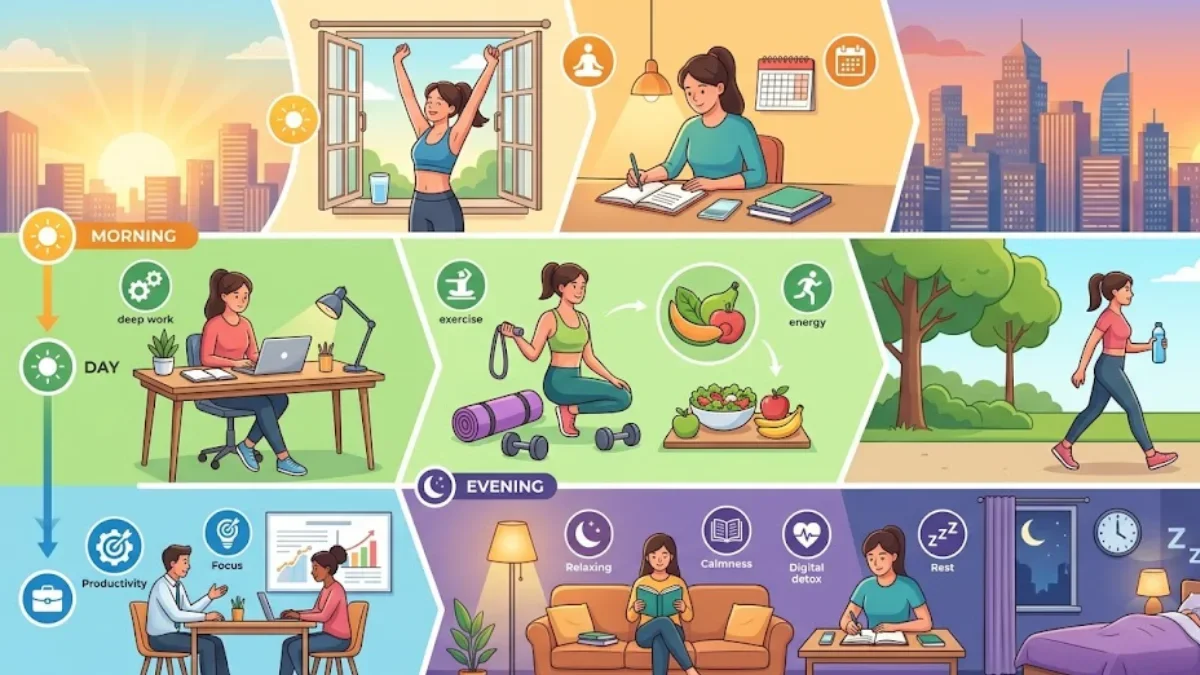
Every person gets the same 24 hours each day, yet some people consistently achieve more, stay healthier, and remain mentally stronger than others. The difference is rarely talent or luck—it is usually the result of daily habits and disciplined routines.
An effective day is not about staying busy every minute. Instead, it is about using your time wisely, taking care of your body, keeping your mind focused, and making steady progress toward your goals. Motivation may help you begin, but discipline is what keeps you moving when motivation fades.
A well-planned day balances physical health, mental well-being, meaningful work, learning, relationships, and proper rest. Rather than chasing temporary excitement, the goal is to build a lifestyle that you can follow consistently for years.
This guide explains what an ideal day should look like, why each habit matters, and how you can gradually create a routine that supports long-term success.
Quick Facts
Topic | Details |
Goal | Build a healthy, productive, and disciplined lifestyle |
Focus Areas | Morning routine, nutrition, work, exercise, sleep, learning |
Suitable For | Students, professionals, entrepreneurs, homemakers |
Core Principle | Consistency over perfection |
Key Success Factor | Discipline instead of temporary motivation |
Daily Foundation | Good sleep, healthy food, focused work, regular movement |
Why Daily Routine Matters
Your daily routine shapes your future more than occasional hard work. Every repeated action becomes a habit, and habits eventually determine your health, career, relationships, and personal growth.
A structured routine helps you:
Improve physical fitness
Increase productivity
Reduce stress
Build self-confidence
Improve focus
Sleep better
Make healthier decisions
Achieve long-term goals consistently
Small improvements every day create remarkable results over time.
The Ideal Morning: Win the First Hour
Many successful people believe the first hour of the day influences everything that follows.
Wake Up at a Consistent Time
Your body works best when you wake up at nearly the same time every day.
Benefits include:
Better energy
Improved mood
Stronger concentration
Better sleep quality
Avoid checking social media immediately after waking.
Drink Water First
After several hours of sleep, your body becomes slightly dehydrated.
Start your morning with one or two glasses of water to:
Wake up your metabolism
Improve digestion
Support brain function
Increase alertness
Practice Yoga, Stretching, or Exercise
Morning movement prepares both the body and mind for the day.
You can choose:
Yoga
Stretching
Walking
Running
Strength training
Breathing exercises
Even 20–30 minutes of activity can improve energy levels and mental clarity.
Spend Time in Silence
Give your mind a calm beginning.
This can include:
Meditation
Deep breathing
Prayer
Gratitude
Journaling
Starting peacefully often leads to better emotional control throughout the day.
Plan Your Day
Instead of reacting to whatever happens, decide your priorities.
Write down:
Three important tasks
One health goal
One learning goal
One personal improvement goal
Planning reduces confusion and improves productivity.
Eat a Healthy Breakfast
Breakfast provides energy for the first half of the day.
A balanced breakfast may include:
Oats
Fruits
Eggs (if part of your diet)
Milk
Yogurt
Nuts
Whole grains
Sprouts
Avoid excessive sugar and heavily processed foods early in the morning.
Work on Important Tasks First
Many people begin the day by answering messages or scrolling through their phones.
Instead, complete your most valuable work when your brain is fresh.
Examples:
Studying
Writing
Coding
Business planning
Creative projects
Problem-solving
This approach is often called working on important tasks rather than immediate tasks.
Urgent work is not always important.
Important work creates your future.
Take Short Breaks
Working continuously for hours often reduces productivity.
Instead:
Stand up every hour.
Stretch.
Drink water.
Rest your eyes.
Take a short walk.
Short breaks improve concentration and reduce mental fatigue.
Follow a Healthy Diet Throughout the Day
Food is fuel.
Your meals should contain:
Nutrient | Good Sources |
Protein | Lentils, paneer, tofu, eggs, fish, chicken |
Healthy fats | Nuts, seeds, olive oil |
Complex carbohydrates | Brown rice, oats, whole wheat |
Fiber | Fruits and vegetables |
Vitamins | Seasonal fruits and vegetables |
Try to:
Eat on time.
Avoid overeating.
Limit sugary drinks.
Reduce processed food.
Stay hydrated throughout the day.
Continue Learning Every Day
Learning should never stop after school or college.
Spend at least 30–60 minutes daily on:
Reading books
Learning new skills
Watching educational content
Practicing languages
Improving professional knowledge
Continuous learning keeps your mind active and prepares you for future opportunities.
Exercise Beyond the Morning
If you cannot exercise in the morning, make time later.
Aim for:
150 minutes of moderate exercise every week
or
75 minutes of vigorous exercise weekly
Also include:
Strength training
Flexibility exercises
Walking
Sports
Regular movement supports both physical and mental health.
Reduce Digital Distractions
Technology is useful, but uncontrolled screen time wastes valuable hours.
Helpful habits include:
Turn off unnecessary notifications.
Avoid endless scrolling.
Schedule social media time.
Keep your phone away during focused work.
Protecting your attention is one of the most valuable modern skills.
Build Strong Relationships
Success is not only about work.
Spend quality time with:
Family
Friends
Mentors
Colleagues
Healthy relationships improve emotional well-being and reduce stress.
End the Day Calmly
The final hour before sleep should prepare your mind for rest.
Good evening habits include:
Reading
Reflection
Gratitude
Planning tomorrow
Light stretching
Avoid stressful work and excessive screen time before bed.
Get High-Quality Sleep
Good sleep is one of the strongest foundations of health.
Most adults need around 7–9 hours of quality sleep.
Good sleep improves:
Memory
Focus
Recovery
Immunity
Mood
Physical performance
Poor sleep affects nearly every part of daily life.
Motivation Starts the Journey—Discipline Finishes It
Motivation changes from day to day.
Discipline stays.
People who rely only on motivation often stop when they feel tired.
Disciplined people continue because they have created routines.
The goal is not to feel motivated every day.
The goal is to keep showing up every day.
A Sample Ideal Daily Schedule
Time | Activity |
5:30–6:00 AM | Wake up and drink water |
6:00–6:45 AM | Yoga or exercise |
6:45–7:00 AM | Meditation or prayer |
7:00–7:30 AM | Healthy breakfast |
8:00–12:00 PM | Deep focused work or study |
12:30 PM | Lunch |
1:00–2:00 PM | Light rest or reading |
2:00–5:00 PM | Meetings, assignments, or practical work |
5:30 PM | Walk or workout |
7:00 PM | Dinner |
8:00 PM | Family, reading, or hobbies |
9:30 PM | Plan tomorrow |
10:00 PM | Sleep |
This schedule is only an example. Adjust it according to your responsibilities.
Common Mistakes to Avoid
Skipping breakfast regularly
Sleeping too late
Spending hours on social media
Ignoring exercise
Eating excessive junk food
Working without breaks
Depending only on motivation
Never planning your day
Avoiding these mistakes can significantly improve your quality of life.
Benefits of Following a Disciplined Routine
Physical Benefits
Better fitness
Healthy weight
Strong immunity
More energy
Mental Benefits
Better concentration
Lower stress
Improved confidence
Better emotional control
Professional Benefits
Higher productivity
Better decision-making
Improved career growth
Greater consistency
Personal Benefits
Better relationships
Increased happiness
Improved self-respect
Greater life satisfaction