In today's digital world, getting access to credit has never been easier. With just a few taps on a smartphone, you can apply for a personal loan, buy products on EMI, or receive a new credit card with a substantial spending limit.
While loans and credit cards can be useful financial tools when used responsibly, they can quickly become dangerous traps that lead to mounting debt, financial anxiety, and long-term money problems.
Understanding how these debt traps work can help you make smarter financial decisions and protect your financial future.
The Illusion of Easy Money
One of the biggest reasons people fall into debt is because loans and credit cards create the illusion of having more money than they actually do.
When you swipe a credit card or take a loan, you're spending future income today.
This can feel harmless initially, especially when monthly payments appear affordable. However, multiple debts can accumulate quickly and become difficult to manage.
Common Credit Card Traps
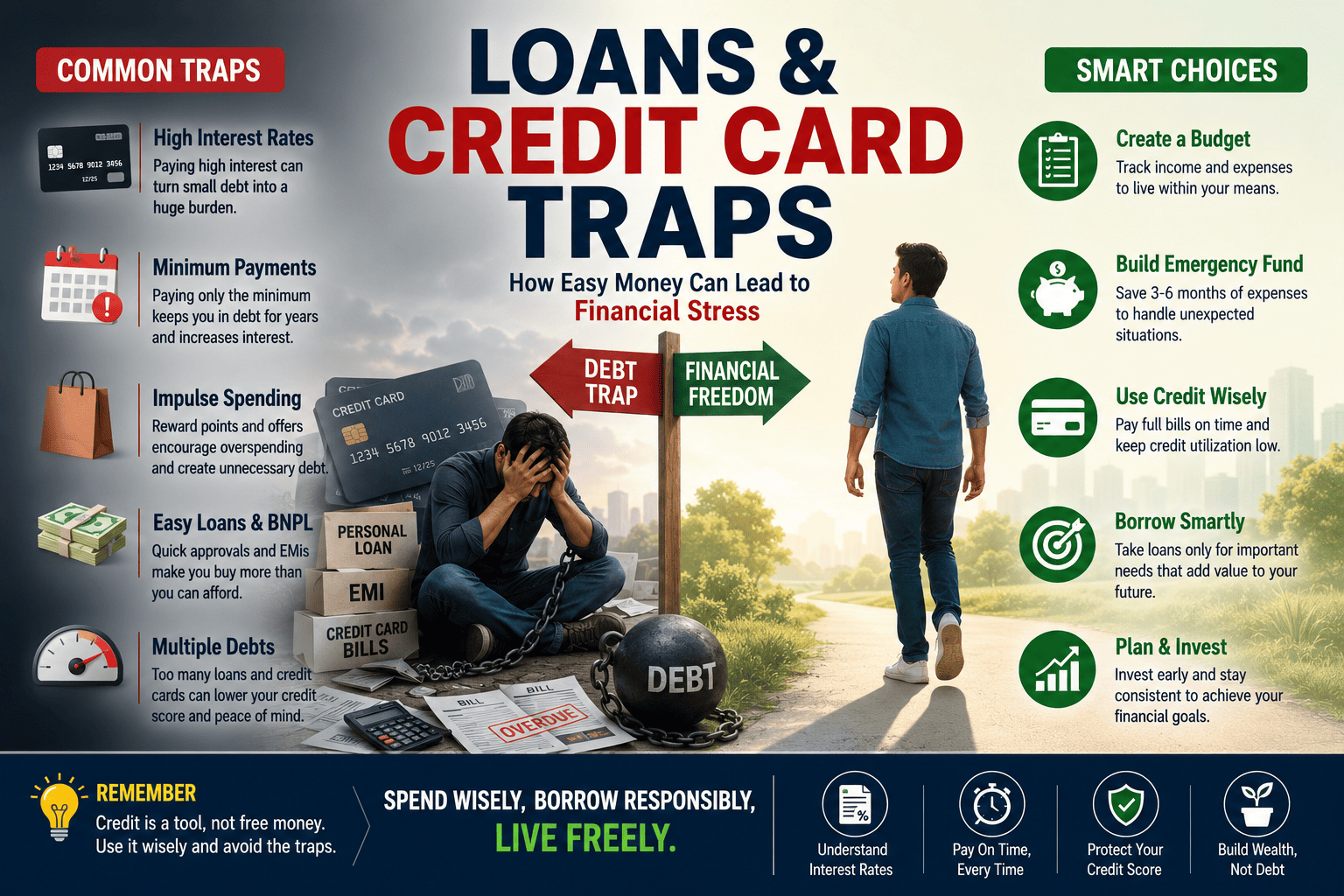
1. Paying Only the Minimum Amount Due
Many cardholders believe paying the minimum amount keeps them financially safe.
In reality, paying only the minimum:
- Extends debt for years
- Increases interest costs
- Makes repayment significantly more expensive
A purchase of ₹50,000 can end up costing much more if only minimum payments are made.
2. High Interest Rates
Credit card interest rates are among the highest forms of consumer debt.
Many cards charge:
- 30% to 48% annual interest
- Additional late payment penalties
- GST and other charges
Missing payments can dramatically increase the total amount owed.
3. Reward Points Encouraging Overspending
Cashbacks, travel points, and discounts often encourage consumers to spend more than they normally would.
Many people justify unnecessary purchases by thinking they're "earning rewards."
The reality is simple:
If you spend ₹10,000 unnecessarily to earn ₹200 in rewards, you've still lost ₹9,800.
4. Multiple Credit Cards
Having several credit cards can create a false sense of financial security.
Common risks include:
- Losing track of payments
- Increased debt accumulation
- Lower credit score due to high utilization
- Greater temptation to overspend
Common Loan Traps
1. Buy Now, Pay Later (BNPL)
BNPL services make purchases feel affordable by splitting payments into installments.
However:
- Multiple BNPL purchases add up quickly
- Missed payments may attract penalties
- Easy approval encourages impulsive buying
Many users underestimate how many installments they are already paying.
2. Personal Loans for Lifestyle Spending
Personal loans should ideally be used for emergencies or productive purposes.
Unfortunately, many people take loans for:
- Vacations
- Luxury gadgets
- Weddings beyond their budget
- Lifestyle upgrades
Borrowing for non-essential expenses can create long-term financial burdens.
3. Debt Consolidation Without Spending Control
Some borrowers take new loans to pay off old debts.
While debt consolidation can help in certain situations, it becomes dangerous if spending habits remain unchanged.
Without financial discipline, people often end up with:
- The new loan
- New credit card debt
- Even larger financial problems
4. Payday and Instant Loans
Instant loan apps often advertise:
- Fast approval
- Minimal documentation
- Immediate cash
The hidden downside includes:
- Extremely high interest rates
- Processing fees
- Aggressive collection practices
These loans can trap borrowers in a cycle of continuous debt.
Warning Signs You're Falling Into a Debt Trap
Watch for these red flags:
? Using one credit card to pay another
? Borrowing money every month
? Paying only minimum dues
? Using loans for daily expenses
? Constantly worrying about repayments
? Having no emergency savings
? Spending more than you earn
If multiple signs apply to you, it's time to review your finances immediately.
How Debt Affects Your Life
Debt doesn't just impact your bank account.
Excessive debt can cause:
- Financial stress
- Anxiety and sleep problems
- Reduced savings
- Poor credit score
- Delayed life goals
- Relationship conflicts
Many people underestimate the emotional cost of financial instability.
Smart Strategies to Avoid Debt Traps
Create a Monthly Budget
Track:
- Income
- Fixed expenses
- Variable expenses
- Savings goals
A budget helps identify spending leaks before they become debt problems.
Build an Emergency Fund
Aim for:
- 3–6 months of expenses
- Easy access savings account
- Dedicated emergency use only
An emergency fund reduces reliance on credit cards during unexpected situations.
Use Credit Cards Responsibly
Follow these rules:
✅ Pay the full bill every month
✅ Keep utilization below 30%
✅ Avoid cash withdrawals
✅ Set payment reminders
✅ Monitor spending regularly
Borrow Only When Necessary
Before taking any loan, ask:
- Is this purchase essential?
- Can I save for it instead?
- Will this loan improve my financial future?
If the answer is no, reconsider borrowing.
Prioritize High-Interest Debt
If you already have debt:
- List all outstanding balances.
- Identify the highest interest rates.
- Pay extra toward those debts first.
- Continue minimum payments on others.
This method reduces total interest costs over time.
The Difference Between Good Debt and Bad Debt
Good Debt
- Education loans
- Business loans
- Home loans (within budget)
These can potentially increase future earning capacity or asset ownership.
Bad Debt
- Credit card debt
- Luxury purchases on loans
- Impulse shopping EMIs
- Borrowing for lifestyle expenses
Bad debt typically loses value quickly while continuing to cost money.
Final Thoughts
Loans and credit cards are not inherently bad. In fact, they can be valuable financial tools when used wisely. The real danger lies in treating borrowed money as free money.
Understanding interest rates, managing spending habits, and maintaining a strong financial plan can help you avoid debt traps that affect millions of people worldwide.
Financial freedom is achieved not by borrowing more, but by spending wisely, saving consistently, and living within your means.
Remember: Every loan should solve a problem, not create a bigger one.
Also Read :- https://backily.com/blog/personal-finance-for-young-adults-a-complete-guide-to-building-wealth-early