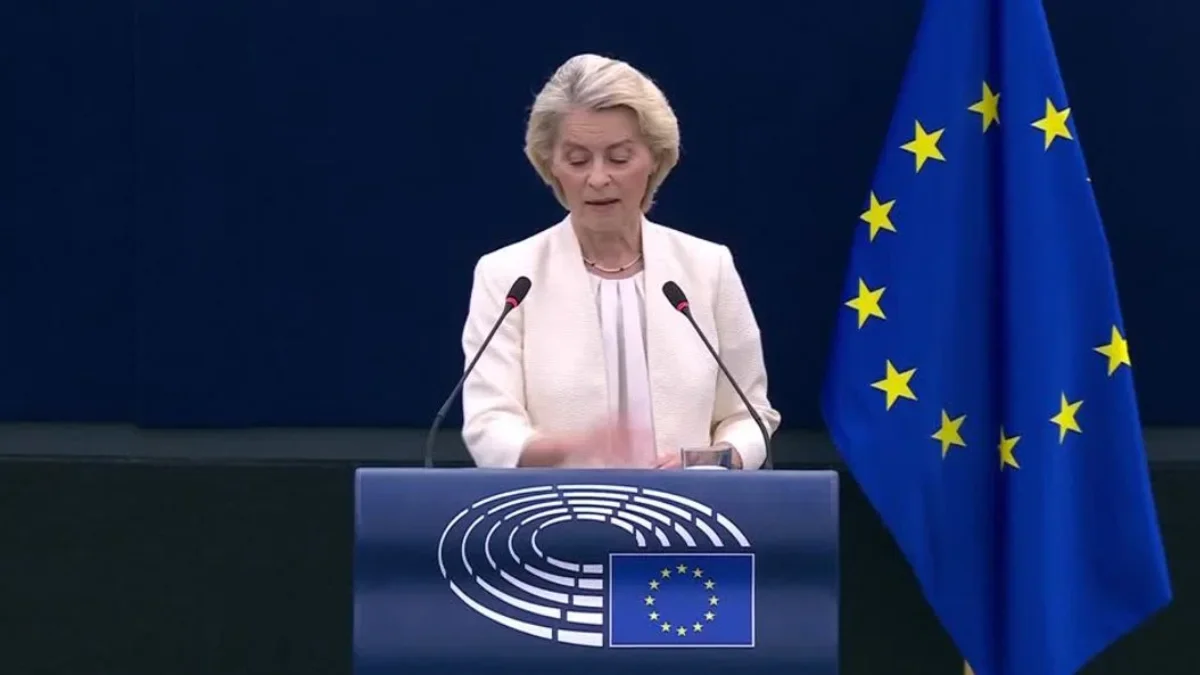
In a surprise geopolitical move at the European Parliament in Strasbourg, European Commission President Ursula von der Leyen proposed opening the door for Canada to become the European Union's first-ever "associate member". Speaking during her annual State of the European Union address with Canadian Prime Minister Mark Carney in attendance, von der Leyen emphasized the urgent need for Western democracies to reimagine traditional partnerships in a changing global landscape.
The proposal received an enthusiastic standing ovation from European lawmakers, after which von der Leyen walked over to embrace Prime Minister Carney. The landmark announcement marks a significant potential turning point for both economies as they seek closer alignment.
What Does "Associate Member" Mean for Canada?
Currently, the 27-nation European Union does not have a formal "associate membership" category. While the EU maintains deep economic integration with non-EU countries like Norway, Iceland, and Switzerland through specific single-market frameworks, an associate status for Canada would represent an entirely new diplomatic model.
According to von der Leyen, the expanded partnership—dubbed an "Alliance for the Future"—would upgrade the existing Comprehensive Economic and Trade Agreement (CETA). The collaboration would stretch far beyond conventional trade, focusing on several strategic pillars:
Technology and Innovation: Launching a joint tech alliance covering artificial intelligence, quantum computing, and cybersecurity.
Defense and Security: Integrating defense industrial bases and expanding cooperation.
Resources and Energy: Strengthening supply chains for critical minerals, green batteries, and clean energy.
The Arctic: Establishing the Arctic region as a flagship joint project for sustainable development and security.
Why Now? Navigating Global Pressures
The push for a tighter alliance comes as both Canada and the European Union face mounting pressures from shifting trade policies under the United States administration, including aggressive tariff measures. Prime Minister Carney has recently advocated for middle powers to unite in defense of multilateralism and economic sovereignty, breaking off certain trade disputes to protect domestic industries. By drawing Ottawa closer, Brussels aims to fortify economic security, secure stable access to Canada’s rich natural resources, and build a unified front against external economic coercion.
What Happens Next?
While the political optics of the proposal were warmly received, turning the vision into reality will require careful navigation. Because the EU has no pre-existing legal framework for associate membership, any formal agreement requires the unanimous approval of all 27 EU member states. Furthermore, nearly a decade after CETA was originally signed, certain EU nations have still not fully ratified the historic trade pact, highlighting potential hurdles ahead.
Prime Minister Carney and European leaders are expected to iron out further framework details during upcoming bilateral discussions, setting the stage for what could become the tightest partnership ever forged between the EU and a North American nation.
Frequently Asked Questions (FAQ)
Q1: What did Ursula von der Leyen propose regarding Canada?
A: Ursula von der Leyen proposed opening the door for Canada to become the European Union's first associate member to deepen cooperation in trade, technology, defense, and energy.