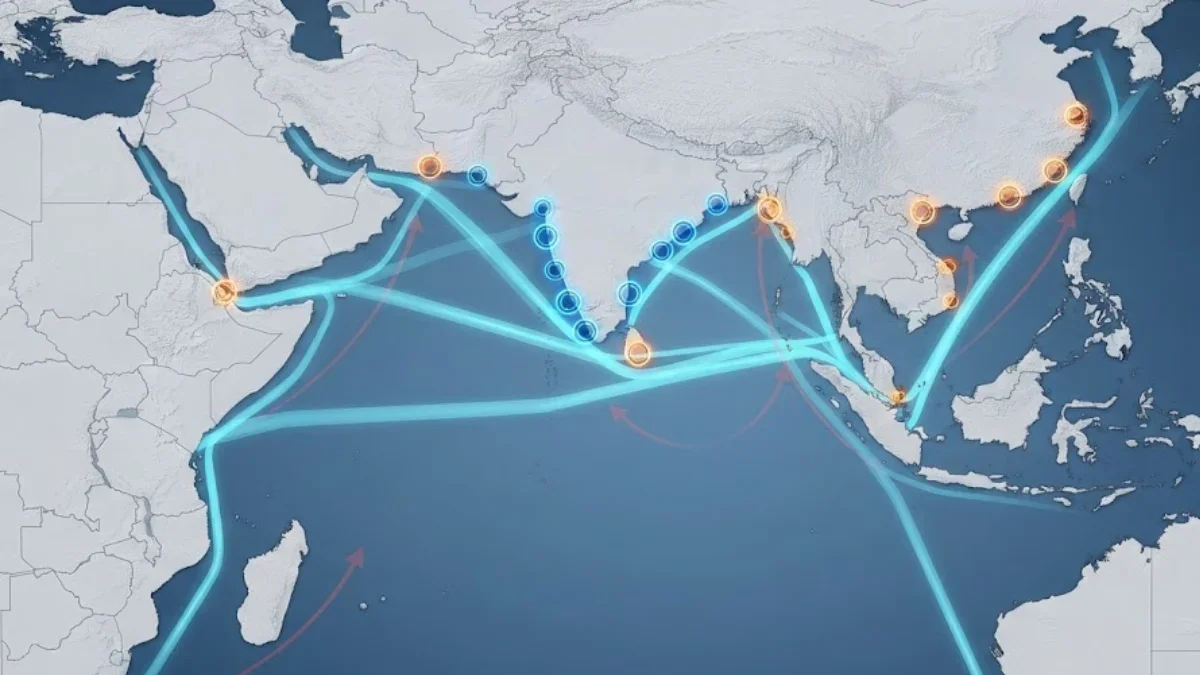
The geopolitical landscape across Asia and the Indian Ocean is undergoing a profound transformation as India and China navigate a complex mix of diplomatic engagement and strategic rivalry. While recent high-level diplomatic talks and military disengagement mechanisms have dialed down immediate border tensions along the Line of Actual Control (LAC), the underlying competition has shifted outward into the broader maritime domain. This evolving rivalry is reshaping trade corridors, defense strategies, and diplomatic alignments across South Asia and the wider Indo-Pacific.
Understanding the Strategic Shift in the Indian Ocean
The Indian Ocean Region (IOR) has emerged as the primary theater for long-term competition between New Delhi and Beijing. Carrying a massive share of global seaborne oil trade and vital commercial cargo, the region is central to the economic lifelines of both nations. China’s expanding naval capabilities, port investments, and dual-purpose infrastructure projects across neighboring coastal states have prompted India to accelerate its own maritime modernization.
For India, maintaining primacy in its immediate maritime neighborhood is an essential security priority. New Delhi has responded by boosting regional security cooperation, strengthening disaster relief capabilities, and advancing critical naval infrastructure—such as commissioning advanced strategic bases—to secure its maritime frontiers and ensure a stable balance of power.
Balancing Diplomacy and Managed Competition
Despite deep-seated strategic mistrust, neither nation seeks an open military conflict. Recent diplomatic engagements, including Special Representative-level negotiations and multilateral summits, have established vital guardrails to manage border stability and prevent localized friction from escalating. At the same time, targeted economic adjustments are taking place. Governments and industries are cautiously exploring selective cooperation in areas like electronics manufacturing and localized commercial ventures, even as strict security vetting remains in place.
Smaller nations across the Indian Ocean are also playing an active role by pursuing diversified foreign policies. Countries such as Sri Lanka, Bangladesh, and regional island states prefer to balance economic partnerships with both economic giants rather than align exclusively with either power. This multipolar approach highlights the diplomatic complexity of maintaining regional influence without forcing smaller economies into a binary choice.
What Lies Ahead for Regional Stability
The future of Asia and the Indian Ocean will largely depend on whether both nuclear-armed neighbors can move beyond managed competition toward sustainable, long-term coexistence. While naval build-ups and infrastructure races will continue, India's strategic advantage lies in its geographic positioning as a resident power committed to a rules-based, inclusive regional order. As global supply chains and security frameworks adapt, the delicate equilibrium between cooperation and rivalry will remain one of the defining geopolitical stories of the decade.
Frequently Asked Questions (FAQ):
What is driving the strategic competition between India and China?
The competition is driven by competing strategic interests in the Indian Ocean Region, maritime trade security, geopolitical influence across smaller South Asian nations, and unresolved border issues along the LAC.How are India and China managing border tensions?
Both nations utilize diplomatic channels like the Special Representative-level talks, military commanders' meetings, and communication hotlines to establish guardrails and stabilize the border.Why is the Indian Ocean important to India?
The Indian Ocean is India's immediate neighborhood and primary maritime lifeline, crucial for national security, regional trade, and safeguarding sea lanes against potential disruptions.How do smaller Indian Ocean countries respond to this rivalry?
Most smaller nations in the region pursue diversified foreign and economic policies, engaging with both India and China for infrastructure and trade while avoiding exclusive strategic alignment.