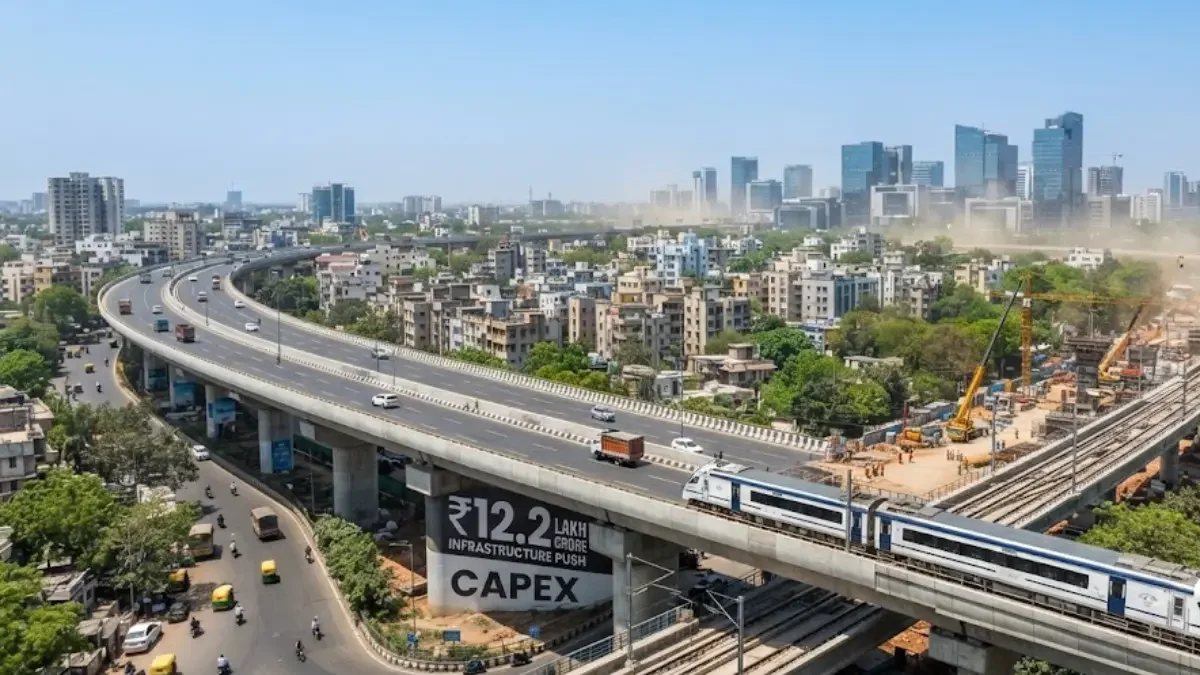
India’s economic landscape is undergoing a structural transformation, anchored by an unprecedented public capital expenditure commitment. With public capex reaching a historic high of ₹12.2 lakh crore under the latest fiscal framework, the government has firmly shifted its focus from basic asset creation to building a highly efficient, multi-modal financial and logistical ecosystem. This long-term strategy aims to reduce logistics costs, enhance regional connectivity, and create multi-year investment opportunities across the country.
What is Driving the Current Infrastructure Surge?
At the core of this momentum is a deliberate state strategy to crowd in private capital and build durable assets. Rather than relying solely on traditional public spending, recent policy measures have introduced innovative financing tools such as the Infrastructure Risk Guarantee Fund and structured Public-Private Partnerships (PPPs). Furthermore, initiatives like municipal bond incentives and asset monetisation through Infrastructure Investment Trusts (InvITs) have unlocked over ₹1.5 lakh crore, allowing funds to be recycled efficiently into new developmental projects.
Key Projects and Transport Corridors
The capital allocation is heavily directed toward major logistical and transport networks designed to bridge economic regions:
High-Speed Rail Networks: Plans are underway to develop seven major high-speed rail corridors, connecting vital industrial and commercial hubs such as Mumbai–Pune, Chennai–Bengaluru, and Delhi–Varanasi.
Inland Waterways: Expanding multimodal transport, the operationalisation of 20 new National Waterways over the next five years aims to shift heavy freight away from crowded roads and railways.
Urban and Tier-II Expansion: Growth is expanding beyond primary megacities. Urban centers with populations exceeding 5 lakh are receiving targeted support to develop modern municipal frameworks and transit systems.
Impact on Ordinary Citizens and Industries
For ordinary citizens, these projects translate into drastically reduced travel times, smoother commutes, and lower logistics overheads for consumer goods. Industries—ranging from manufacturing and warehousing to retail and quick-commerce—benefit from predictable supply chains and streamlined compliance. Enhanced digital infrastructure and data center incentives are also generating localized employment opportunities outside traditional IT hubs.
What Lies Ahead?
While execution challenges and global commodity price fluctuations remain risks, India's domestic consumption-led model provides strong economic resilience. As financial institutions refine long-term lending practices and debt market reforms mature, this sustained capital expenditure trajectory is projected to keep the nation’s medium-term economic growth robust, cementing modern infrastructure as the bedrock of a developing economy.