The dynamics of modern warfare and geopolitical alliances have shifted dramatically, with recent intelligence disclosures pointing to a high-level technological link between Moscow and Tehran. According to reports from US officials and international intelligence sources, advanced tracking data and orbital assets may be playing a critical role in how Iran targets American military infrastructure in the region.
The Prince Sultan Airbase Attack and Satellite Tracking
The core of the intelligence concern centers around a late March strike on the Prince Sultan Airbase in central Saudi Arabia. The attack, which involved a combination of precision missiles and drones, resulted in injuries to 12 US service members and caused extensive structural and equipment damage, including the destruction of a high-value US Airborne Warning and Control System (AWACS) aircraft.
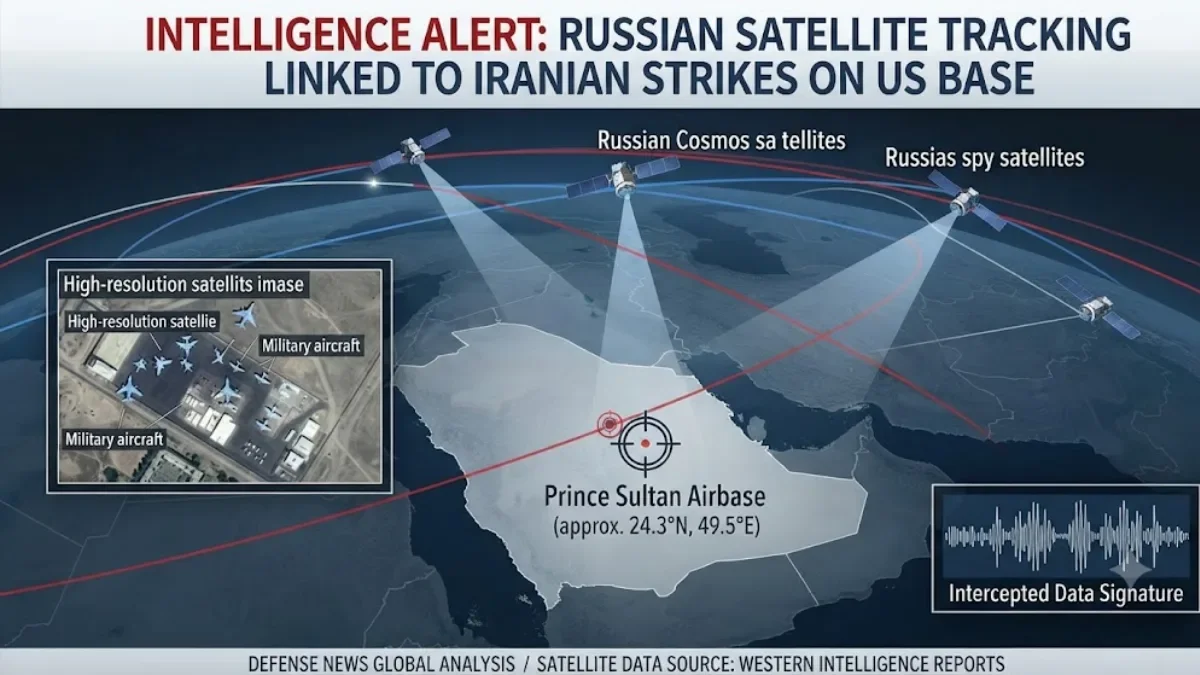
Intelligence evaluations indicate that fourteen Russian Cosmos spy satellites passed directly over the airbase just days prior to the assault. US defense sources suggest that the timing, sequencing, and technical composition of these orbital passes gave operators access to a vast spectrum of intelligence.
What Data Did the Satellites Capture?
The satellite constellation reportedly included advanced spacecraft capable of performing multiple reconnaissance tasks. Their capabilities include:
High-Resolution Imagery: Capturing detailed visual layouts of base positioning and aircraft locations.
Signals Intelligence: Intercepting local communications and identifying active radar or air-defense signatures.
Movement Tracking: Monitoring changes in the deployment patterns of high-value military assets.
While Russia has consistently denied providing sustained military or intelligence assistance to Iran during regional conflicts, Western defense analysts note that the precision of recent strikes indicates external data-sharing support that exceeds standard domestic capabilities.
Why This Matters for Global Security
This unfolding situation highlights a deepening strategic partnership between Russia and Iran. Historically, the military pipeline saw Tehran supplying hardware like Shahed drones to Moscow for use in Eastern Europe. Now, intelligence sharing appears to be moving in the reverse direction during Middle Eastern escalations. For ordinary citizens and global markets, this cooperation signals a more protracted, volatile conflict where traditional American air superiority faces sophisticated, intelligence-backed asymmetric threats.
What Lies Ahead
As the Pentagon reviews force protection measures across the Middle East, military planners are forced to account for space-based reconnaissance vulnerabilities. If near-peer adversaries continue to supply targeting data to regional actors, US and allied forces will need to adapt rapid camouflage, electronic jamming, and mobility doctrines to safeguard critical defense assets against increasingly accurate strikes.