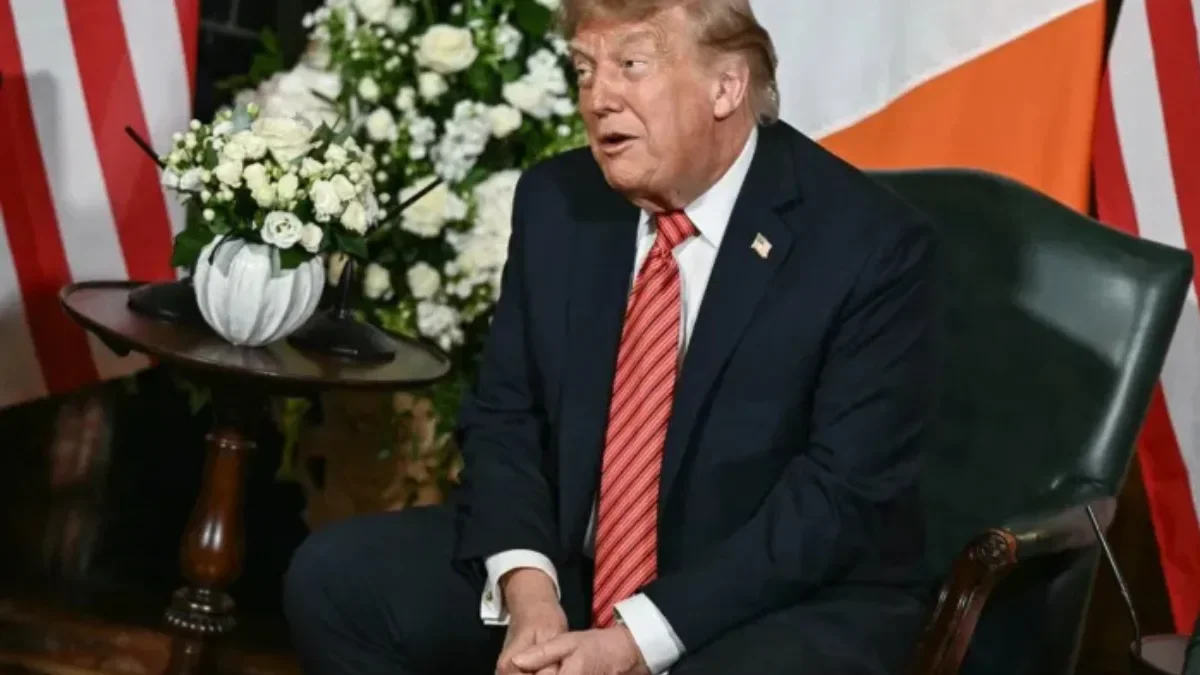
US President Donald Trump has broken with decades of careful American diplomacy by declaring that he would "love to see" a united Ireland and suggesting that reunification is "going to happen eventually". Speaking in Dublin at the start of a two-day visit that also included a trip to his golf resort in Doonbeg, Trump’s off-the-cuff remarks immediately drew sharp criticism from the British government and unionist politicians in Northern Ireland.
The unexpected comments came after talks with Irish Prime Minister Micheál Martin. Trump told reporters that a unified Ireland would be "fantastic" and "a great feather in everybody's cap," adding that since it will eventually happen, "it may as well happen now". While nationalist groups and parties like Sinn Féin welcomed the spotlight on the constitutional future of the island, pro-United Kingdom unionist leaders strongly condemned the intervention. Critics pointed out that Washington has historically maintained strict neutrality on the issue to safeguard the delicate peace process established by the 1998 Good Friday Agreement.
The Good Friday Agreement explicitly dictates that the constitutional status of Northern Ireland rests entirely with its people, and a border poll or referendum can only be called if there is clear evidence of majority support for unification. Current polls indicate that while support for a united Ireland has grown, a majority in Northern Ireland still favors remaining part of the United Kingdom. Leaders of the Democratic Unionist Party (DUP) pushed back against Trump's comments, emphasizing that Northern Ireland's future will be decided locally rather than through foreign commentary. Meanwhile, a Downing Street spokesperson confirmed that the UK government’s position under the peace accord remains completely unchanged.
Trump's visit was already drawing intense public scrutiny and protests in Dublin regarding broader foreign policy issues, including his administration's stance on the Middle East. Later addressing guests at the US ambassador's residence, Trump sought to downplay the political storm, describing his statement as a lighthearted response to a difficult question and calling unification "a very cool thing". However, international analysts note that his departure from traditional US neutrality could permanently alter how local political factions view Washington's role as an impartial mediator. As the debate over a potential border poll continues to evolve across the island, Trump’s remarks have injected a fresh layer of international pressure into an already deeply sensitive regional discussion.