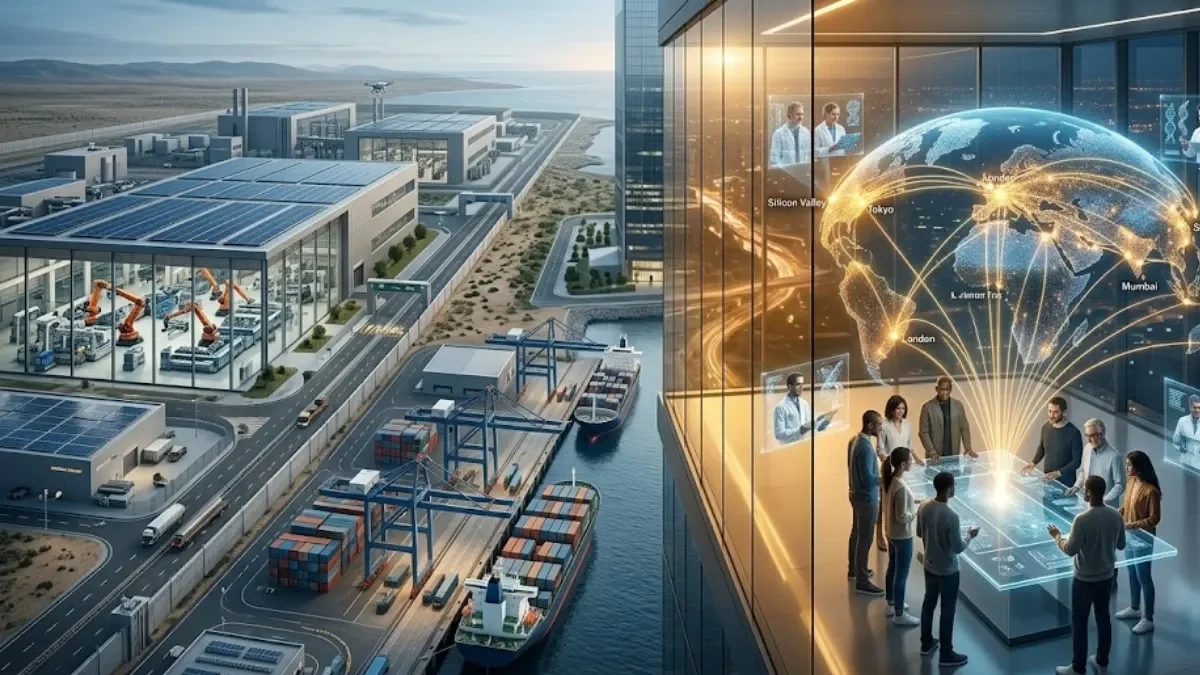
Globalization is entering a new phase. For decades, businesses expanded production across continents, sourcing raw materials and manufacturing products wherever costs were lowest. Today, however, that model is changing. Rising geopolitical tensions, pandemics, trade disputes, and concerns over national security have encouraged companies to rethink how they build and manage supply chains.
At the same time, another form of globalization is accelerating. Instead of moving factories across borders, companies are increasingly moving work across borders. Thanks to digital technologies, cloud computing, remote work, and global communication platforms, businesses can hire engineers in India, designers in Brazil, analysts in Poland, and developers in Vietnam without relocating employees.
This creates an interesting contrast. Physical goods are becoming more regional, while skilled workers are becoming more global. Economists often describe this shift as the deglobalization of supply chains alongside the hyper-globalization of talent.
Understanding this trend is important because it will shape the future of business, employment, technology, trade, and economic growth for years to come.
Quick Facts
Topic | Details |
Main Trend | Regionalization of supply chains and globalization of talent |
Driven By | Geopolitics, technology, digital transformation |
Supply Chain Strategy | Reshoring, Nearshoring, Friendshoring |
Talent Strategy | Remote hiring, distributed teams, freelance economy |
Major Technologies | Cloud computing, AI, video conferencing, cybersecurity |
Key Industries | Manufacturing, IT, Finance, Healthcare, Consulting |
Impact | Business resilience, new employment opportunities, changing global trade |
Long-Term Outlook | Hybrid global economy with regional production and global talent |
What Is Happening?
Businesses are changing how they operate globally.
In the past, companies focused on producing goods wherever manufacturing costs were cheapest. Today, many organizations are prioritizing resilience over the lowest possible cost.
Instead of relying on a single country for production, businesses are spreading manufacturing across multiple regions or bringing production closer to consumers.
At the same time, companies are hiring talent from almost anywhere in the world. Digital communication has removed many geographical barriers that once limited hiring.
Understanding Deglobalization of Supply Chains
Deglobalization does not mean global trade is ending.
Instead, it refers to businesses becoming less dependent on long international supply chains.
Companies are reducing risks by making production networks shorter and more diversified.
Common strategies include:
Reshoring – Bringing manufacturing back to the home country.
Nearshoring – Moving production to nearby countries.
Friendshoring – Manufacturing in politically trusted partner nations.
Multi-sourcing – Buying components from multiple suppliers rather than one.
The objective is not to eliminate globalization but to make supply chains more reliable.
Why Are Supply Chains Becoming More Regional?
Several major events exposed weaknesses in global production networks.
Pandemic Disruptions
COVID-19 interrupted manufacturing, shipping, and transportation worldwide.
Many companies experienced shortages because production was concentrated in a few regions.
Geopolitical Tensions
Trade disputes and political conflicts have encouraged companies to diversify production locations.
Governments increasingly view certain industries as strategically important.
National Security
Products such as:
Semiconductors
Medical equipment
Defense technology
Telecommunications infrastructure
are now considered critical national assets.
Countries want greater domestic production capacity.
Rising Logistics Costs
Shipping costs, fuel prices, and delivery delays have made long-distance manufacturing less predictable.
Businesses increasingly value stability alongside cost savings.
What Is Hyper-Globalization of Talent?
While factories are becoming more local, skilled work is becoming more global.
Companies can now recruit professionals from virtually any country.
Instead of relocating workers, employers connect through digital platforms.
Examples include:
Software developers
AI researchers
Graphic designers
Financial analysts
Digital marketers
Customer support teams
Cybersecurity professionals
Technology allows these employees to collaborate in real time despite being thousands of kilometers apart.
Why Is Global Talent Expanding So Quickly?
Remote Work Revolution
The widespread adoption of remote work demonstrated that many knowledge-based jobs can be performed from anywhere.
Digital Collaboration Tools
Modern workplaces rely on:
Video meetings
Cloud storage
Project management software
Instant messaging
Shared online documents
These tools make international teamwork seamless.
Talent Shortages
Many developed economies face shortages of skilled professionals.
Hiring globally allows companies to access larger talent pools.
Cost Efficiency
Businesses can reduce hiring costs while providing attractive opportunities to professionals in emerging economies.
Comparing the Two Trends
Supply Chains | Talent |
Becoming more regional | Becoming more global |
Physical movement of goods | Digital movement of work |
Higher focus on resilience | Higher focus on skills |
Manufacturing | Knowledge economy |
Logistics driven | Internet driven |
Sensitive to borders | Less affected by geography |
Historical Background
During the 1990s and early 2000s, globalization accelerated rapidly.
Companies expanded manufacturing across Asia and other low-cost regions.
This model emphasized:
Lower production costs
Global sourcing
Just-in-time inventory
International trade
The world economy became deeply interconnected.
Recent global disruptions, however, revealed the risks of relying too heavily on distant suppliers.
Meanwhile, advances in digital infrastructure created new opportunities for global knowledge work.
Economic Impact
The shift creates both opportunities and challenges.
Positive Effects
More resilient supply chains
Increased employment flexibility
Greater innovation through global collaboration
Reduced business disruptions
Better access to specialized expertise
Challenges
Higher manufacturing costs
Increased investment requirements
Complex regulatory compliance
Cross-border tax issues
Wage competition in some sectors
India's Role
India is one of the biggest beneficiaries of the globalization of talent.
The country has a large pool of:
Software engineers
AI specialists
Data scientists
Financial analysts
Consultants
Digital service professionals
India continues to strengthen its position as a global technology and business services hub.
At the same time, India is also encouraging manufacturing growth through initiatives that support domestic production and attract international investment.
This combination allows India to participate in both manufacturing regionalization and global digital services.
Technology Behind This Transformation
Several technologies make global talent collaboration possible.
Cloud Computing
Employees can securely access company systems from anywhere.
Artificial Intelligence
AI improves productivity, automation, translation, and collaboration.
Cybersecurity
Secure digital infrastructure enables organizations to safely manage international teams.
High-Speed Internet
Reliable internet connectivity has become the foundation of modern global work.
Business Strategies Emerging Today
Many multinational companies are now adopting a hybrid model.
Instead of choosing between globalization and localization, they combine both.
Typical strategy:
Manufacture products closer to customers.
Source components from multiple regions.
Hire talent globally.
Centralize digital operations.
Diversify suppliers.
Invest in automation.
This approach improves resilience while maintaining competitiveness.
Benefits
For Businesses
Better risk management
Faster response to disruptions
Access to worldwide expertise
Improved innovation
Greater operational flexibility
For Employees
More international job opportunities
Remote work flexibility
Global career growth
Higher earning potential
Exposure to multinational projects
For Consumers
More stable product availability
Improved services
Faster innovation
Better customer experiences