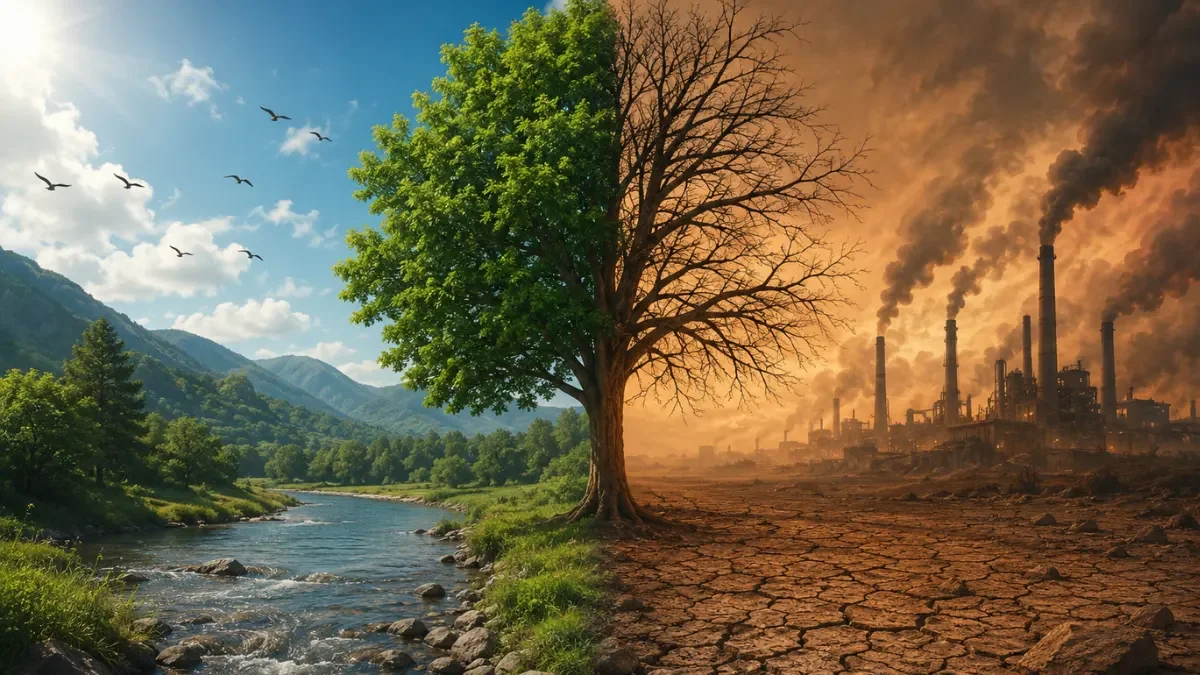
Global warming is no longer a problem of the future—it is happening today. Around the world, temperatures are rising, glaciers are melting, forests are shrinking, and extreme weather events are becoming more common. Scientists have repeatedly warned that human activities are the main reason behind these changes.
One of the biggest causes of global warming is the release of greenhouse gases into the atmosphere. These gases come from burning coal, oil, and natural gas, cutting down forests, industrial pollution, transportation, and other human activities. As these gases increase, the Earth's atmosphere traps more heat, causing the planet to become warmer.
The effects of global warming are being felt everywhere. Heatwaves are becoming stronger, heavy rainfall and floods are increasing in many regions, while droughts and water shortages are affecting others. Wildlife, agriculture, and even human health are under growing pressure.
Understanding why global warming is increasing is the first step toward finding solutions. Governments, industries, and individuals all have a role to play in reducing pollution and protecting the environment.
Quick Facts
Topic | Details |
Subject | Global Warming |
Main Cause | Human-produced greenhouse gases |
Major Greenhouse Gas | Carbon dioxide (CO₂) |
Other Greenhouse Gases | Methane (CH₄), Nitrous Oxide (N₂O) |
Main Human Activities | Burning fossil fuels, deforestation, industrial pollution |
Affected Areas | Entire planet |
Major Impact | Rising temperatures, climate change, sea-level rise |
Long-term Risk | More frequent extreme weather, biodiversity loss, food insecurity |
What Is Global Warming?
Global warming refers to the long-term increase in the Earth's average surface temperature. It happens because greenhouse gases trap heat in the atmosphere, creating what is known as the greenhouse effect.
The greenhouse effect is a natural process that keeps Earth warm enough for life. However, excessive greenhouse gases caused by human activities have made this effect much stronger, leading to rising global temperatures.
What Is Causing Global Warming?
1. Burning Fossil Fuels
Coal, oil, and natural gas are used to generate electricity, power vehicles, and operate industries.
When these fuels are burned, they release large amounts of carbon dioxide (CO₂) into the atmosphere.
Examples include:
Cars and trucks
Power plants
Factories
Airplanes
Ships
These emissions are among the largest contributors to global warming.
2. Cutting Down Trees (Deforestation)
Forests naturally absorb carbon dioxide from the atmosphere.
When trees are cut down:
Less CO₂ is absorbed.
Stored carbon is released back into the atmosphere.
Wildlife loses its natural habitat.
Large-scale deforestation in tropical forests has significantly reduced the Earth's natural ability to remove carbon dioxide.
3. Industrial Pollution
Factories release greenhouse gases during manufacturing processes.
Industries such as:
Cement production
Steel manufacturing
Chemical plants
Oil refining
produce substantial emissions that contribute to global warming.
4. Plastic Pollution
Plastic itself is not the biggest cause of global warming, but it contributes in several ways:
Plastic is mostly made from fossil fuels.
Manufacturing plastic releases greenhouse gases.
Burning plastic creates harmful air pollution.
Plastic waste can damage ecosystems that help regulate the climate.
Reducing plastic use helps lower emissions over time.
5. Agriculture and Livestock
Farming also contributes to climate change.
Examples include:
Cattle produce methane, a powerful greenhouse gas.
Rice farming releases methane.
Fertilizers release nitrous oxide.
Although agriculture is essential, improving farming practices can reduce emissions.
6. Transportation
Road vehicles, airplanes, trains, and ships burn fuel every day.
The transportation sector releases billions of tons of carbon dioxide annually, making it one of the largest contributors to climate change.
How Global Warming Happens
The process is relatively simple:
Sunlight reaches Earth.
The Earth absorbs energy and warms up.
The Earth releases heat back toward space.
Greenhouse gases trap part of this heat.
As greenhouse gases increase, more heat remains trapped.
Earth's average temperature gradually rises.
This enhanced greenhouse effect is driving today's climate change.
Major Effects of Global Warming
Rising Temperatures
Average temperatures across the world have increased, leading to more frequent and intense heatwaves.
Melting Ice and Rising Sea Levels
Glaciers and polar ice sheets are melting faster than before.
As ice melts:
Sea levels rise.
Coastal communities face greater flooding risks.
Some islands become increasingly vulnerable.
Extreme Weather
Global warming is linked to:
Stronger storms
Heavy rainfall
Floods
Droughts
Wildfires
Heatwaves
These events can damage infrastructure, agriculture, and local economies.
Threat to Wildlife
Many animals struggle to adapt to rapidly changing climates.
Species face:
Habitat loss
Food shortages
Migration challenges
Increased risk of extinction
Impact on Agriculture
Changing weather patterns affect farming by:
Reducing crop yields
Increasing pest outbreaks
Causing water shortages
Making food production more unpredictable
Human Health
Climate change can affect health through:
Heat-related illnesses
Poor air quality
Spread of certain infectious diseases
Food and water insecurity
Historical Background
Scientists have understood the greenhouse effect for more than a century.
However, industrialization greatly increased the use of fossil fuels, leading to a rapid rise in greenhouse gas emissions.
Over recent decades, global scientific organizations have consistently found that human activities are the dominant cause of modern global warming.
Environmental Impact
Global warming affects ecosystems in many ways:
Coral reef damage
Forest degradation
Ocean warming
Changing rainfall patterns
Loss of biodiversity
Healthy ecosystems are essential for maintaining clean air, water, and stable climates.
Economic Impact
Climate change also has financial consequences.
Governments and businesses spend billions on:
Disaster recovery
Flood protection
Crop losses
Infrastructure repairs
Healthcare costs
The economic burden is expected to grow if emissions remain high.
Social Impact
Communities can experience:
Water shortages
Food insecurity
Increased migration
Loss of livelihoods
Greater pressure on public health systems
Poor and vulnerable populations are often affected the most.
What Can Be Done?
Governments
Governments can:
Invest in renewable energy.
Protect forests.
Improve public transportation.
Promote clean industries.
Strengthen climate policies.
Industries
Businesses can:
Improve energy efficiency.
Use cleaner technologies.
Reduce waste.
Shift to renewable power.
Individuals
Everyone can contribute by:
Saving electricity.
Planting trees.
Using public transport or cycling.
Reducing plastic use.
Recycling waste.
Conserving water.
Supporting sustainable products.
Small actions from millions of people can make a meaningful difference.
also read : What Is Quantum Physics? Real-Life Uses and Why It Matters