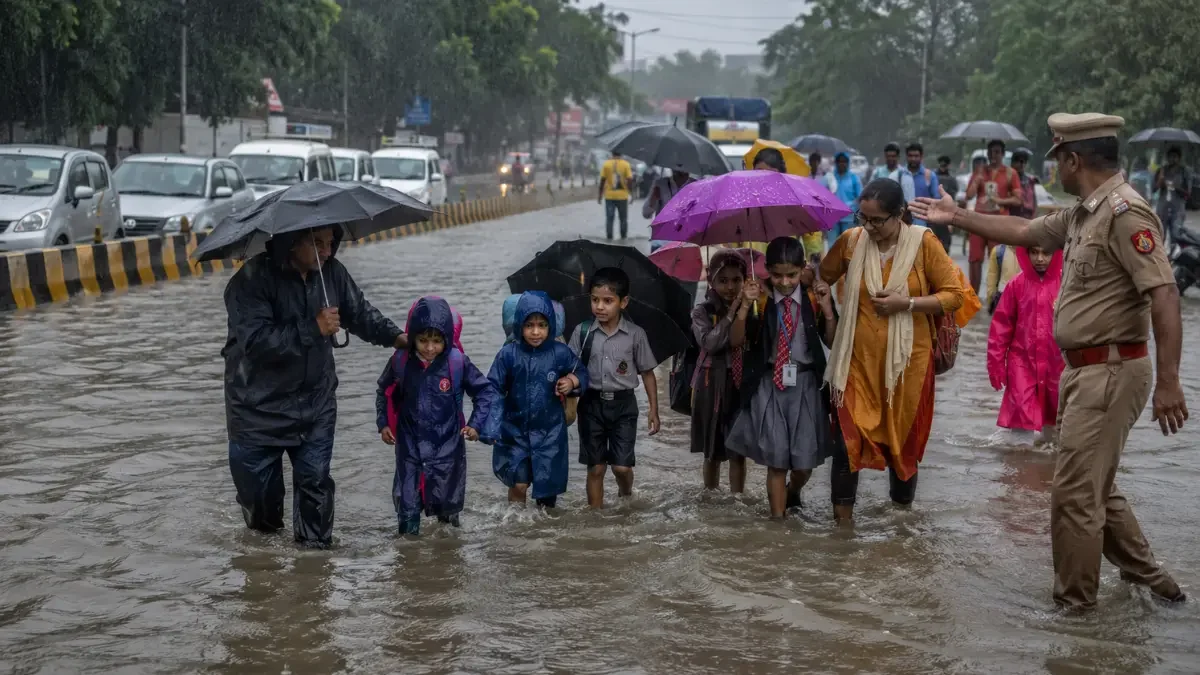
The southwest monsoon has intensified across Uttar Pradesh, bringing widespread rainfall to many districts. While the rain has offered relief from extreme summer temperatures, it has also caused flooding, waterlogging, transport disruptions, and tragic loss of life in several areas.
As weather conditions worsened, local administrations in multiple districts announced temporary school closures to protect students and staff. Authorities also increased emergency preparedness, monitored rivers, and appealed to residents to avoid unnecessary travel during periods of intense rainfall.
The situation highlights how seasonal weather can quickly affect daily life. Schools, businesses, transport services, farmers, and emergency responders all face challenges during periods of heavy rainfall. Officials continue to monitor the weather closely as additional rain is expected in some parts of the state.
For residents, the focus remains on safety, following official advisories, and staying informed through district administration updates and weather forecasts.
Quick Facts
Particular | Details |
Event | Heavy monsoon rainfall in Uttar Pradesh |
State | Uttar Pradesh |
Season | Southwest Monsoon 2026 |
Main Impact | Flooding, waterlogging, transport disruption, casualties |
Government Action | Precautionary school closures in affected districts |
Weather Agency | India Meteorological Department (IMD) |
Priority | Public safety and disaster management |
What Happened?
Heavy rainfall associated with the active southwest monsoon affected several parts of Uttar Pradesh, leading to difficult conditions in many districts.
The rainfall resulted in:
Waterlogged roads
Localized flooding
Traffic disruptions
Damage to property in some areas
Rain-related fatalities
Temporary closure of schools in affected districts
District administrations took precautionary measures based on local conditions and weather forecasts to reduce risks, especially for school-going children.
Why Schools Were Closed
School closures are commonly announced during periods of severe weather to reduce the risk of accidents.
Major reasons included:
Flooded roads making travel unsafe
Poor visibility during heavy rainfall
Water accumulation around schools
Risk from damaged trees or electric poles
Public safety advisories issued by local authorities
Most closures were temporary and intended as preventive measures rather than responses to damage at educational institutions.
Timeline of Events
Stage | Development |
Active Monsoon | Rainfall increased across parts of Uttar Pradesh |
Heavy Showers | Waterlogging and localized flooding reported |
Emergency Response | District administrations monitored conditions |
School Closures | Authorities suspended classes in affected areas |
Continuing Monitoring | Weather forecasts reviewed for further action |
Background: Why Is Uttar Pradesh Receiving Heavy Rain?
The southwest monsoon normally reaches Uttar Pradesh during the rainy season and provides much of the state's annual rainfall.
Some weather systems can temporarily strengthen the monsoon, leading to:
Continuous rainfall over several hours
Heavy showers within short periods
Overflowing drains
Rising water levels in rivers and streams
Urban areas often experience waterlogging because drainage systems struggle to handle sudden, intense rainfall.
How Heavy Rain Affects Daily Life
Even a single day of intense rainfall can disrupt normal activities.
Common impacts include:
Delayed public transport
Slow-moving traffic
Temporary power interruptions
Difficulty reaching workplaces
Disruption of markets
School closures
Increased pressure on emergency services
People living in low-lying areas generally face greater risks during prolonged rainfall.
Government Response
Authorities in Uttar Pradesh activated precautionary measures to reduce risks.
These included:
Monitoring weather forecasts
Issuing public advisories
Closing schools where necessary
Keeping disaster response teams on alert
Monitoring rivers and drainage systems
Coordinating with district officials
Local administrations also appealed to residents to avoid unnecessary travel during periods of heavy rainfall.
Role of the India Meteorological Department (IMD)
The India Meteorological Department (IMD) plays a critical role during the monsoon season.
Its responsibilities include:
Monitoring weather systems
Issuing rainfall forecasts
Providing district-wise alerts
Warning about heavy rainfall
Helping governments prepare in advance
These forecasts enable local authorities to take preventive decisions, including school closures.
Impact on Different Sectors
Education
The biggest immediate impact was on schools.
Temporary closures helped:
Reduce travel risks
Protect students
Prevent accidents during severe weather
Although learning was interrupted briefly, safety remained the top priority.
Transportation
Heavy rainfall affected transportation by causing:
Traffic congestion
Waterlogged roads
Slower movement of buses
Delays in local travel
Motorists were advised to drive carefully due to reduced visibility.
Agriculture
Monsoon rainfall is essential for agriculture in Uttar Pradesh.
Benefits
Better soil moisture
Support for paddy cultivation
Improved groundwater recharge
Challenges
Waterlogging
Crop damage in low-lying fields
Delayed agricultural activities in flooded areas
Public Health
Standing water after heavy rainfall can increase health risks.
Authorities generally advise residents to:
Drink clean water
Avoid walking through contaminated floodwater
Maintain hygiene
Prevent mosquito breeding around homes
Economic Impact
Heavy rainfall can temporarily affect economic activity by disrupting transportation and local markets.
Possible effects include:
Reduced business hours
Delayed supply chains
Damage to small shops in flooded areas
Increased spending on emergency response and infrastructure repairs
However, adequate monsoon rainfall also supports agriculture, which remains an important part of Uttar Pradesh's economy.
Social Impact
The rains affected everyday life in several ways.
Families experienced:
Travel difficulties
Delayed school schedules
Increased safety concerns
Temporary disruptions in routine activities
Communities often work together during such situations by helping neighbors, sharing information, and supporting vulnerable residents.
Major Highlights
Heavy monsoon rainfall affected several districts.
Rain-related casualties were reported.
Local administrations temporarily closed schools in affected areas.
Waterlogging disrupted transport and daily activities.
Authorities increased monitoring and emergency preparedness.
Weather conditions continue to be closely monitored.
Challenges During the Monsoon
Managing heavy rainfall presents several challenges.
These include:
Urban flooding
Poor drainage infrastructure
Traffic management
Emergency rescue operations
Protecting vulnerable populations
Maintaining essential public services
Long-term urban planning can help reduce future risks.
Expert Analysis
Weather experts often note that monsoon management requires both accurate forecasting and quick administrative action.
Temporary school closures, public advisories, and emergency preparedness are preventive measures designed to reduce casualties and protect public safety.
Experts also emphasize improving:
Drainage systems
Flood forecasting
Urban planning
Community awareness
Disaster preparedness
What Happens Next?
Authorities are expected to continue monitoring weather developments.
Future actions may include:
Reviewing rainfall forecasts daily
Extending or lifting school closures depending on conditions
Monitoring river levels
Continuing rescue and relief efforts where necessary
Issuing additional advisories if heavy rainfall persists
Residents should rely on official announcements from district administrations and the IMD for the latest updates.
Key Highlights
Heavy monsoon rainfall affected multiple districts in Uttar Pradesh.
Rain-related fatalities were reported.
Schools were temporarily closed in affected districts as a precaution.
Flooding and waterlogging disrupted transportation.
Authorities activated emergency preparedness measures.
Weather monitoring continues as more rainfall remains possible.
Why This News Matters
This event is important because it demonstrates how seasonal weather can have widespread effects beyond rainfall itself.
For ordinary citizens, heavy rain can affect commuting, education, health, employment, and access to essential services.
For governments, such situations test disaster preparedness, emergency response systems, and infrastructure resilience.
For farmers, the monsoon remains both a valuable source of water and a potential risk when rainfall becomes excessive.
The situation also highlights the importance of early weather warnings, strong drainage infrastructure, and public awareness during the monsoon season.